Escaping the Minecraft Underworld: A Practical Guide to Getting Out of the Nether
Getting out of the Nether is primarily a portal problem, not a respawn problem. This guide explains what to do when the portal works, goes dark, needs repairs, or disappears from reach.
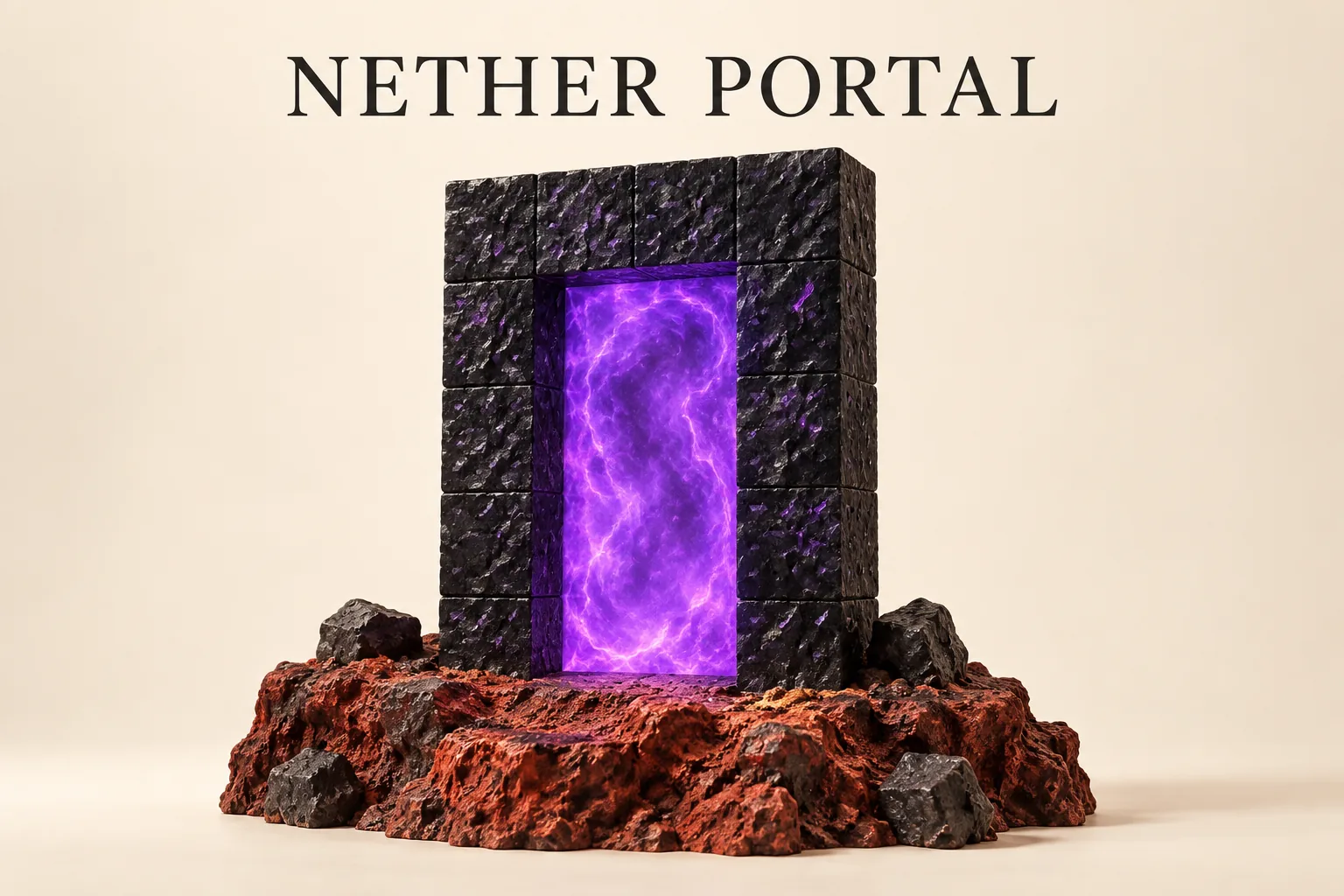
The Minecraft underworld is officially called the Nether, and escaping it depends on separating two problems that are easy to confuse: transportation and respawning. A Nether portal is the route between the Nether and the Overworld. A respawn anchor only determines where you return after dying in the Nether; it does not transport you home. Minecraft’s Nether Update guide and its guide to spawning and dying make that distinction clear.
Start by diagnosing the portal
If the portal you used to enter the Nether is still active, it is the direct way back. Use that portal rather than treating the surrounding terrain as an escape puzzle. The important question is not how far you have traveled; it is whether the portal can still perform its dimension-to-dimension function.
If the frame is present but the portal is no longer active, the problem may be ignition rather than construction. Minecraft’s official Flint and Steel guide confirms that flint and steel can light Nether portals and specifically recommends carrying one into the Nether in case a portal goes out. That makes flint and steel an escape tool, not merely a general fire-starting item.
This is the first useful distinction: an inactive portal can be a small equipment problem, while a missing or incomplete frame is a building problem. Searching for a respawn anchor before checking the portal addresses the wrong problem.
Repair an incomplete frame with regular obsidian
A ruined portal is not a ready-made exit. According to Minecraft’s Ruined Portal guide, its frame is incomplete. The repair is to add regular obsidian to complete the frame and then ignite it with flint and steel. A ruined-portal chest may also contain additional obsidian, but that is a possible source of materials rather than a guaranteed supply.
That changes the decision when a portal structure is nearby. If the missing pieces can be replaced, repair is more direct than abandoning the area and hoping to find another route. The required materials also explain why carrying flint and steel alone is not enough: ignition solves activation, while regular obsidian solves the frame.
Do not treat every Nether emergency as a reason to build a new portal from scratch. First identify whether the structure in front of you is an incomplete ruined portal or an already-built portal that only needs to be lit. The two situations look similar from a distance but demand different resources.
A respawn anchor is a checkpoint, not a doorway
A respawn anchor is useful when the goal is to keep operating in the Nether after death. It must be charged with glowstone, can hold up to four charges, and consumes one charge each time it is used for a respawn. If it is empty, destroyed, or otherwise unusable when you die, the official guide says you return to the world spawn.
None of those functions sends the player through a portal. An anchor changes the consequences of dying; it does not solve the transportation problem. That makes it a reasonable tool for a continued Nether expedition, but the wrong answer to the narrower question of how to get back to the Overworld.
The charge limit matters as well. Four charges are a finite reserve, so an anchor should not be mistaken for an unlimited safety net. More importantly, an anchor can leave you in the Nether after death—the opposite of an immediate escape. Use it only when remaining in the Nether is an acceptable outcome.
A bed is not an emergency exit
Beds and respawn anchors are dimension-specific tools. Minecraft’s official spawning guide explains that beds set respawn points in the Overworld, while using a bed in a dimension where beds do not work, such as the Nether, causes an explosion.
That makes a bed a particularly bad substitute for a portal. It does not create a safe Nether checkpoint, and it does not turn death into a controlled trip home. If death becomes the fallback, the result depends on whether a valid respawn point exists. Without a valid personal respawn point, the guide says the player returns to the world spawn; with a usable Nether anchor, the player can instead respawn in the Nether while charges remain.
The practical lesson is simple: dying is a respawn decision, not a portal decision. Before accepting that outcome, determine whether the intended destination is the world spawn or the Nether anchor. Otherwise, the attempt to escape may only reset the problem.
Match each failure to the item that fixes it
The escape plan becomes clearer when the tools are assigned to their actual jobs:
- Active Nether portal: use it to travel between dimensions.
- Portal frame that is intact but inactive: use flint and steel to relight it.
- Incomplete ruined portal: replace missing portions with regular obsidian, then ignite it.
- Respawn anchor: charge it with glowstone when the goal is a Nether respawn after death, not an Overworld return.
- Bed in the Nether: do not use it as a checkpoint or escape method.
This is more than an inventory checklist. It prevents a common category error: carrying a tool that manages survival and expecting it to provide transportation. Flint and steel, obsidian, glowstone, a portal, and an anchor are connected parts of Nether survival, but they are not interchangeable.
The shortest route home is usually the clearest one
When the portal is visible and usable, go through it. When it is dark, relight it. When the frame is incomplete, repair it with regular obsidian and ignite it. Only when no usable portal is available should the question shift from transportation to respawn—and even then, a respawn anchor means continuing in the Nether, not escaping it.
That is the central answer to escaping Minecraft’s underworld: restore the portal before trying to replace it with death. The portal solves the dimension problem, flint and steel solves activation, regular obsidian solves a broken frame, and a respawn anchor manages a different problem altogether.
Sources
Related notes
- NOOB vs PRO: Superhero One-Block Battle in Minecraft—What Actually Decides It?
- Why a Terrifying Minecraft Mod Works by Taking Away Control
- Exploring Minecraft’s “Forgotten Dimension”: What I Could Actually Verify
- My Minecraft Transformers Rabbit Hole: An Adventure or an Add-On?
- 1000 Players Simulate Mining Prison in Minecraft: What the Premise Actually Requires