Meta VR Glasses in the U.S.: What’s Available Now and What’s Coming
Meta’s true VR glasses are not a current retail product. Compare the announced Meta VR Glasses with today’s Quest headsets and displayless AI glasses.
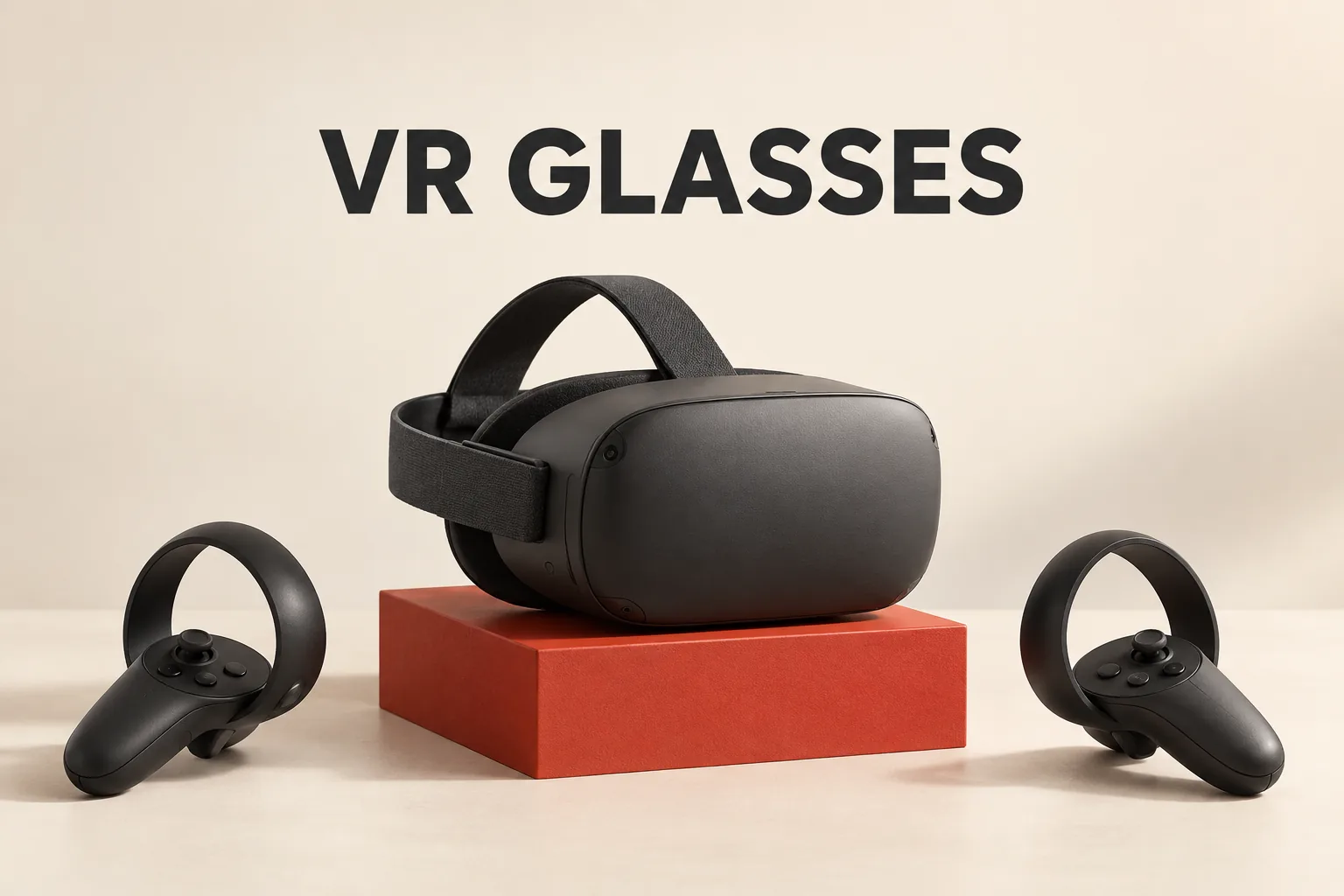
As of 4:26 a.m. ET on September 24, 2026, Meta’s VR glasses are an announced future product, not a current U.S. retail option. Meta announced Meta VR Glasses on September 23 with a planned Spring 2027 release and an announced U.S. price of $1,299.99.
For VR today, Meta’s U.S. lineup points to the Quest 3S and Quest 3. For everyday eyewear, Meta Glasses are a separate displayless AI product. Meta Ray-Ban Display is another distinct line with its own U.S. ordering status. The shared word “glasses” makes these products sound more interchangeable than they are.
The word “glasses” hides four different buying questions
There are four different products or product categories to separate:
- Meta VR Glasses are the future display-based VR product announced for Spring 2027.
- Meta Quest 3S and Quest 3 are the current Meta VR and mixed-reality devices available through Meta’s U.S. product family.
- Meta Glasses are displayless glasses built around cameras, open-ear audio, and Meta AI. Meta announced a U.S. starting price of $299.
- Meta Ray-Ban Display is a separate display-equipped eyewear product. Meta’s September 23 update says online ordering began in the United States on that date.
This is more than a naming distinction. A displayless camera-and-audio product cannot answer a need for virtual screens or 3D movies. A VR headset can provide immersive digital content, but it is a different form factor from ordinary eyewear. The right purchase depends first on whether a display and immersion are non-negotiable.
What Meta VR Glasses are actually promising
Meta’s announcement describes Meta VR Glasses as approximately 100 grams and paired with a separate compute-and-battery puck. The glasses use a 5K display built with micro-OLED panels and are designed for hand, eye, and voice interaction.
The announced use cases include 3D movies, immersive live sports, and a multi-screen workspace. Those details place the product in a different category from glasses that only capture photos, play audio, or answer questions through a voice assistant. The central promise is visual computing through the glasses themselves.
The timing matters more than the specification list. Meta says the product is planned for Spring 2027, so the $1,299.99 figure is an announced U.S. price rather than a current checkout price. The media and workspace features are also part of the product announcement, not evidence that the device is available for hands-on use as of this cutoff.
If you need Meta VR now, compare Quest 3S and Quest 3
Meta’s U.S. Quest family page lists the Quest 3S starting at $349.99 and the Quest 3 starting at $599.99. Meta’s device comparison lists the same Snapdragon XR2 Gen 2 processor and 8 GB of RAM for both models, so the important difference is not a separate high-performance app platform.
| Quest 3S | Quest 3 | |
|---|---|---|
| Current U.S. starting price | $349.99 | $599.99 |
| Processor and RAM | Snapdragon XR2 Gen 2 and 8 GB | Snapdragon XR2 Gen 2 and 8 GB |
| Optical system | Quest 2-style optical system with Fresnel lenses | Pancake lenses |
| IPD adjustment | Three preset positions | Continuous slider |
| Depth hardware | Software depth estimation | Dedicated depth sensor |
Both models support full-color mixed reality, hand tracking, Touch Plus controllers, and current Quest-generation applications according to Meta’s comparison. That makes the decision less about whether the lower-priced model can enter the same platform and more about which viewing hardware you need.
The Quest 3S makes sense when the lower starting price and access to the current Quest platform matter most. The Quest 3 is the more considered choice when lens design, display clarity, eye-spacing adjustment, or depth sensing are important to how you plan to use mixed reality. Meta’s own specifications support treating the additional cost primarily as a display, optics, fitting, and sensing decision—not simply as a faster-versus-slower processor choice.
Meta Glasses are everyday AI glasses, not a small VR headset
Meta’s June announcement describes Meta Glasses as a U.S. product starting at $299. The launch information centers on Meta AI, cameras, open-ear audio, prescription compatibility, and hands-free use. Most importantly for this comparison, Meta refers to them as displayless glasses.
That makes their purpose easier to understand. They are for capturing content, listening, and interacting with an assistant while wearing glasses. They are not the product to choose for a virtual workspace, a 3D movie viewed through the lenses, or an immersive game environment. The absence of an in-lens display is not a minor specification; it defines the category.
Where Meta Ray-Ban Display fits
Meta Ray-Ban Display should not be treated as another name for Meta VR Glasses. Meta’s September 23 update gives it a separate product identity and says U.S. online ordering began that day. The update discusses features such as calendar controls, cycling and public-transit navigation, and a hologram video-call experience.
The rollout is staged. Meta says cycling and transit navigation were scheduled for later in September in the U.S. and Canada, while hologram calling was expected to roll out to U.S. users in WhatsApp Early Access later in fall 2026. Those statements describe planned availability windows, not a guarantee that every feature was active for every buyer at the cutoff.
This product answers a different question from Meta VR Glasses: whether a wearer wants information and controls in display-equipped eyewear. It does not turn the $299 displayless Meta Glasses into VR, and it does not move the announced Meta VR Glasses’ Spring 2027 release date forward.
A practical choice for U.S. buyers
Use the requirement—not the product name—as the filter:
- Need immersive VR or mixed reality now: compare Quest 3S and Quest 3. Start with price, then decide whether the Quest 3’s optics, IPD adjustment, and depth hardware justify the higher price for your use.
- Need camera, audio, and AI in displayless glasses: look at Meta Glasses. Do not buy them expecting visual overlays or virtual screens.
- Need a display in everyday eyewear: Meta Ray-Ban Display is the relevant separate category, but check which features are actually available rather than assuming every announced rollout is complete.
- Need glasses-like hardware designed for full VR: Meta VR Glasses are the product to watch, but the current official timing is Spring 2027 and the announced U.S. price is $1,299.99.
The accurate answer to “What are Meta VR glasses?” is therefore not a single product recommendation. Today’s Meta choices divide into current Quest VR, displayless Meta Glasses, and separately rolling out display-equipped eyewear. The product that most directly matches full VR in a glasses-like form is announced, but it is not yet the U.S. purchase available on September 24, 2026.