Weather Forecast Today: Why the U.S. Answer Starts With a Location
There is no single useful weather forecast for the entire United States. Start with a city, state, or ZIP code, then choose the forecast view that matches the question.
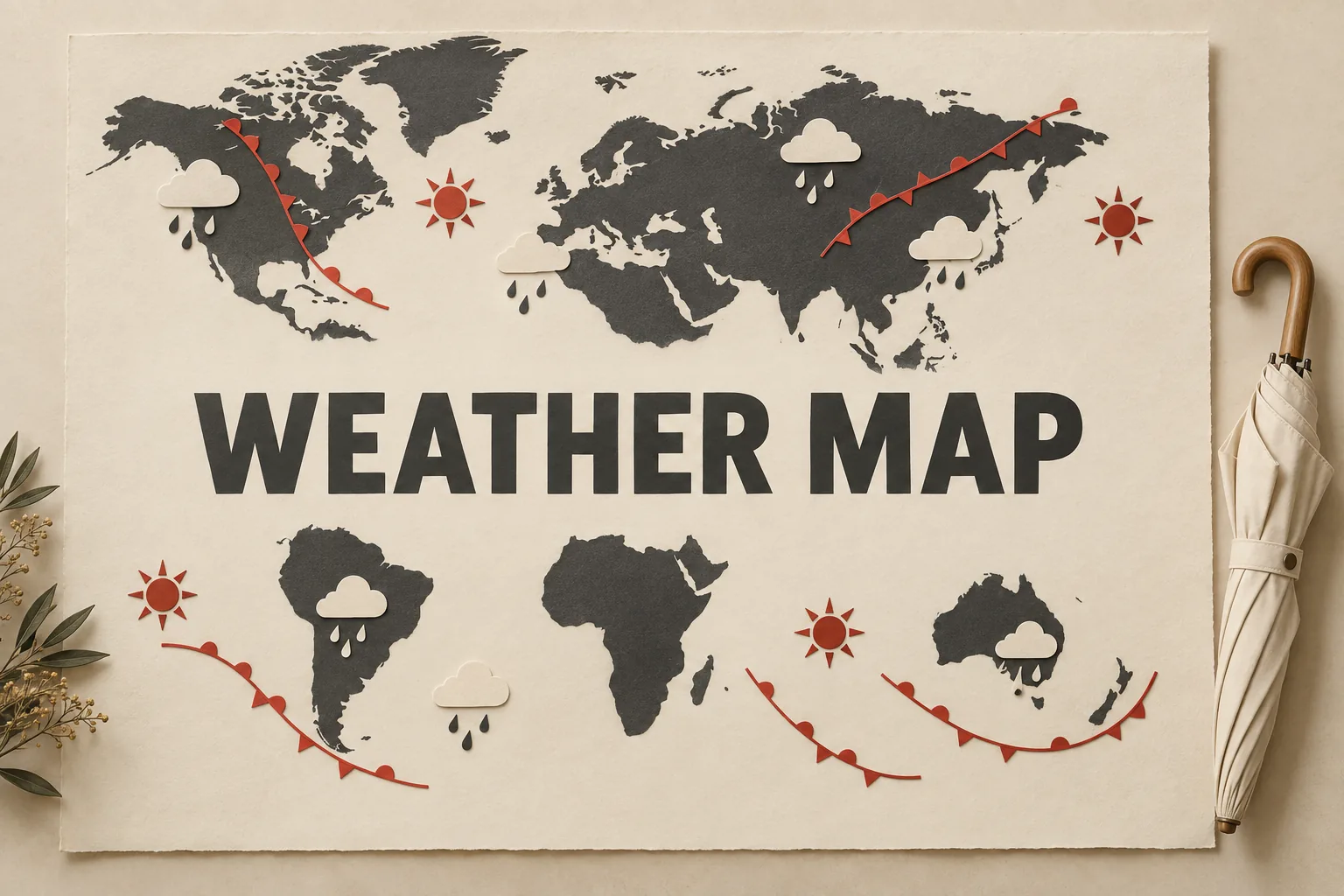
A national question needs a local starting point
“Today’s weather” does not have one useful U.S.-wide answer. The National Weather Service’s Get Your NWS Forecast page asks for a U.S. city, state, or ZIP code before showing current conditions and today’s forecast for that location.
That requirement is part of the answer, not just a search step. The place is inseparable from the forecast. Without a location, a weather summary can describe the country broadly but cannot answer what a reader should expect where they are.
Match the forecast view to the decision
Start with the location forecast when the question is simply what today looks like in one place. When timing matters, open the NWS Hourly Weather Graph. It presents conditions hour by hour, which makes it more useful for comparing parts of the day than treating “today” as one unchanging block.
Use the NWS National Forecast Maps for a different question: how weather is distributed across the country. The map collection includes nationwide products for temperature, precipitation, wind, and other forecast information. That broader view provides context, but it does not replace selecting a location for a local forecast.
The practical answer to “What’s the weather today?”
The official path is straightforward:
- Select the city, state, or ZIP code that matters.
- Read the location forecast for the day-level picture.
- Switch to the hourly graph when the timing of conditions matters.
- Use national maps when comparing regions or looking at the country as a whole.
The key takeaway is that “today” describes the time window, not the place. A meaningful forecast needs both: a specific U.S. location and the forecast view that fits the decision.