Escaping the Minecraft Underworld: How to Get Out of the Nether
The Nether escape problem has two separate solutions: portals move you home, while respawn anchors only change where you return after dying.
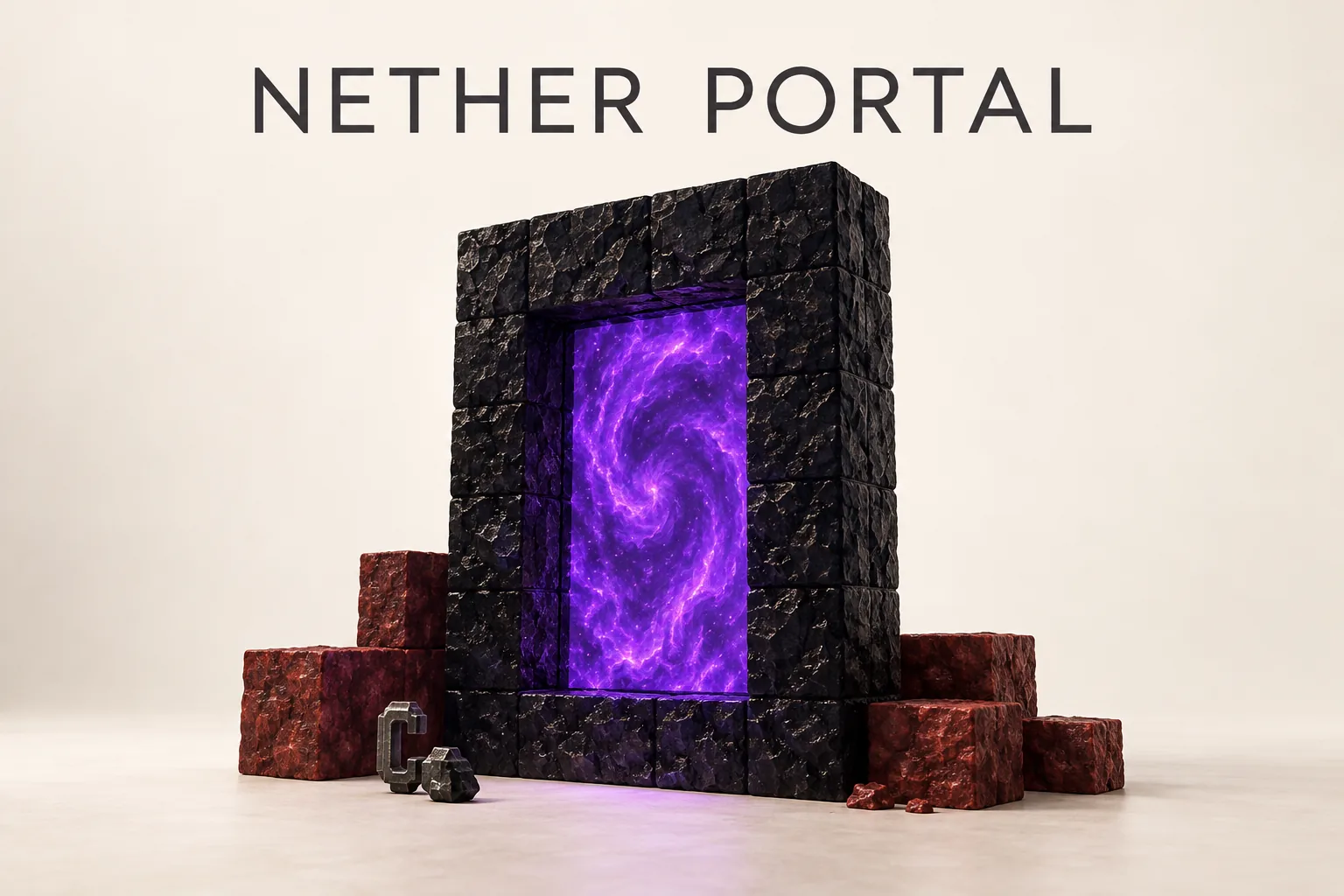
The reliable way out of the Nether is an active Nether portal. A respawn anchor is useful for surviving a failed expedition, but it is not a second doorway home. Minecraft’s official guidance treats these as separate systems: portals move you between dimensions, while respawn anchors establish where you return after death.
That distinction makes an apparent escape emergency easier to diagnose. Before abandoning your gear or deliberately dying, determine whether the portal is still there, merely inactive, or completely gone.
Is the portal missing, or only inactive?
If the portal’s purple field is present, entering it is the direct escape route. The problem is different when the obsidian frame remains but the field has disappeared. In that case, the official Flint and Steel guide confirms that flint and steel can relight an extinguished Nether portal. Use the tool on the inside of the frame rather than treating the area as a lost destination.
This is why flint and steel is more than a way to start a fire during a Nether trip. It is a recovery tool for the route you already created. Carrying one separates a temporary interruption from a genuine construction problem.
The practical diagnosis is simple:
- Purple portal field present: enter it.
- Obsidian frame present but unlit: relight it with flint and steel.
- No usable frame: a replacement portal requires obsidian and a way to ignite it.
The third case is materially different from the first two. Relighting restores existing transport; building a replacement creates transport again. The official Dragon’s Breath guide confirms that obsidian is used to build a Nether portal. Flint and steel alone cannot replace a missing frame, and a respawn anchor cannot substitute for either one.
When you are lost, do not confuse a backup with an exit
Being unable to see the portal is not the same as having no way out. If you are still alive and have the materials needed for a replacement, the sensible question is whether you can restore a portal without turning the situation into a death-and-recovery problem.
That distinction matters because each item solves a different failure:
- Flint and steel addresses ignition.
- Obsidian addresses portal construction.
- A respawn anchor addresses the location where you reappear after dying.
A player who has the first two may be able to rebuild transport. A player who has only an anchor has a safety net, not an exit. Making or using the anchor does not move the player back to the Overworld.
This also changes how to think about exploration. The most valuable preparation is not a single universal escape item. It is keeping the two escape systems available for their intended jobs: a method to activate a portal and, when possible, a separate plan for death.
Why death is a recovery gamble
Dying can return you to a valid respawn point, but it does not safely solve the portal problem. It creates a second problem: getting back to the dropped inventory.
Minecraft’s official spawning and dying guide states that dropped items can be retrieved for five minutes from when the place where they were dropped is loaded. The important condition is “loaded.” The relevant timer is not simply a guaranteed five-minute window beginning at the instant of death regardless of what happens afterward. Once the death location is loaded, the recovery window matters.
That makes intentional death a poor default escape strategy. It trades an unknown route through the Nether for a known risk to your inventory and a return trip to the death location. If you choose it because no portal can be found, the choice should be understood as an inventory-recovery gamble rather than a shortcut.
If you have already died, the priority changes. The portal question can wait; returning to the loaded death location becomes the urgent task. The official timing rule is why a respawn plan is valuable before the trip, not merely after a mistake.
What a respawn anchor actually changes
A respawn anchor is the Nether’s answer to the problem of returning after death. Minecraft’s official guide says it can set a respawn point in the Nether. It is crafted with six crying obsidian and three glowstone, charged with glowstone, and can hold up to four charges. Each respawn consumes one charge.
Those details make the anchor a finite retry budget. Four charges do not provide four ways to leave the Nether; they provide up to four uses of the Nether respawn point before the anchor must be charged again. If the anchor has no charge, the official guide says you return to the world spawn instead.
Beds are not a substitute. The same guide explains that beds set respawn points in the Overworld, while using a bed in a dimension where beds are not valid causes an explosion. In other words, bringing a bed into the Nether does not create a safe Nether checkpoint. A charged respawn anchor is the purpose-built option for that job.
The anchor therefore improves the odds of recovering from death, but it does not protect the inventory by itself, repair a destroyed portal, or transport you between dimensions. Its value comes from changing where the next attempt begins.
The useful escape rule
Treat the Nether as a two-part problem. First, preserve or restore the portal: enter an active one, relight an intact but inactive one, or build a replacement when you have obsidian and an ignition method. Second, manage the consequences of failure with a valid Nether respawn point rather than a bed.
The most important distinction is also the easiest to miss: a portal gets you out while you are alive; a respawn anchor gives you another starting point after you are not. Once those roles are kept separate, “escaping the underworld” stops being a single desperate move and becomes a choice between restoring transport and protecting the next attempt.
Sources
Related notes
- NOOB vs PRO: Superhero One-Block Battle in Minecraft—What Actually Decides It?
- Escaping the Minecraft Underworld: A Practical Guide to Getting Out of the Nether
- SMACKING BUGS FOR REFUSING MY RELIGION | Warhammer 40k: Space Marine II
- Escape From Playtime Release Date: What Steam Early Access Includes
- Escape From Playtime Release Date: October 21, 2026