Fishing Starts Before You Cast
The first meaningful fishing milestone is not a dramatic catch. It is understanding the chain from setup to cast, retrieve, and release.
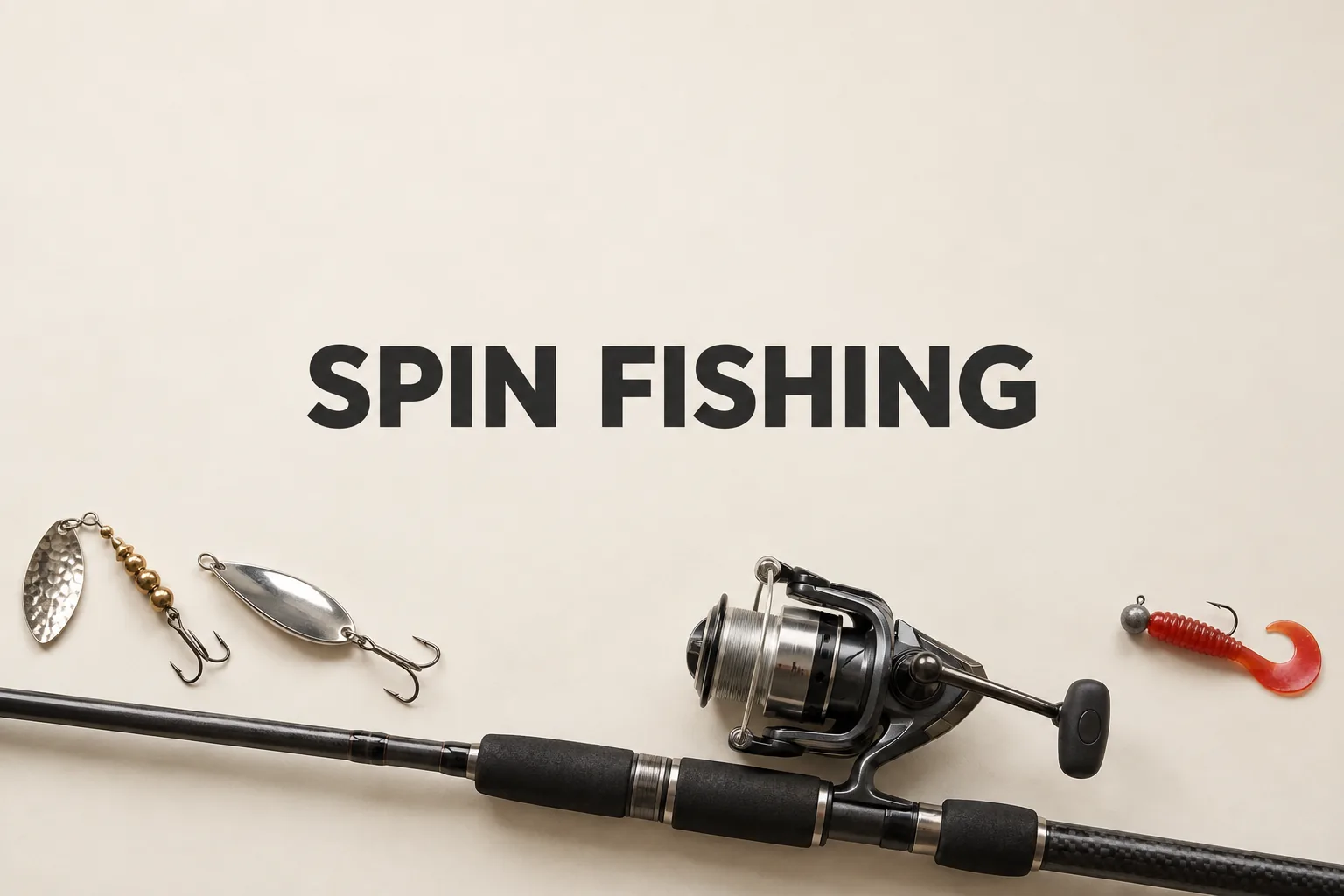
Fishing looks like a single action—cast, wait, reel—but the skill is a chain. The U.S. Fish & Wildlife Service’s first-time guide and the National Park Service’s spin-fishing guide point to a useful lesson: the first meaningful milestone is not a dramatic catch. It is being able to repeat the process without improvising every step.
What does learning to fish actually involve?
Start by choosing one method you can understand clearly. The NPS describes spin fishing with a rod, spinning reel, line, and lure: attach the lure, cast it, and retrieve it. The FWS first-time guide also describes a hook, sinker, and bobber setup. It lists 4–12-pound-test monofilament line and places the sinker 6–12 inches above the hook.
These descriptions are not a reason to pile every component onto one rig. They show that fishing begins with a deliberate connection between equipment and action. The useful question is not which item promises the most excitement. It is whether the chosen setup can be assembled consistently and observed clearly in the water.
Why is casting only half the lesson?
The FWS guide teaches the Improved Clinch Knot and suggests practicing with a hookless rubber casting plug. That removes the sharp hook while the caster works on the motion. Once the rig is attached, the NPS describes the complete loop: cast the lure, then retrieve it.
A cast that lands is not the finish. Retrieval is where the lure’s movement becomes part of the technique. A productive practice question is therefore not only whether something bites, but whether the same setup can be cast and retrieved deliberately.
When does the lesson include the fish?
Catch-and-release is part of fishing skill, not a last-second add-on. The NPS recommends keeping the fish in the water as much as possible, wetting hands or gloves, supporting the fish gently beneath the belly, and never holding it by the gills. It also recommends removing the hook quickly with pliers or hemostats. If a fish is deeply hooked, cut the line close to the hook rather than causing more injury.
For release, hold the fish upright underwater until it has recovered and its gills are moving. Release it only when it swims away on its own. This sequence changes the meaning of landing a fish: the moment the fish reaches the bank or boat is not the end of the task.
What should count as progress?
Progress can be judged without inventing a success story. Was the rig assembled consistently? Could casting be practiced without a hook, then followed by a controlled retrieve? Was the fish-handling plan clear before a bite?
Those questions shift attention away from luck and gear accumulation and toward repeatable actions. Learning to fish is not memorizing one perfect setup. It is understanding the chain from connection to cast, cast to retrieve, and landing to release. Once each link can be observed, the water becomes feedback rather than guesswork.