How a First Fishing Setup Comes Together
Fishing becomes easier to understand when it is treated as a sequence: build the rig, practice the cast, respond to clear feedback, and plan the release before the fish arrives.
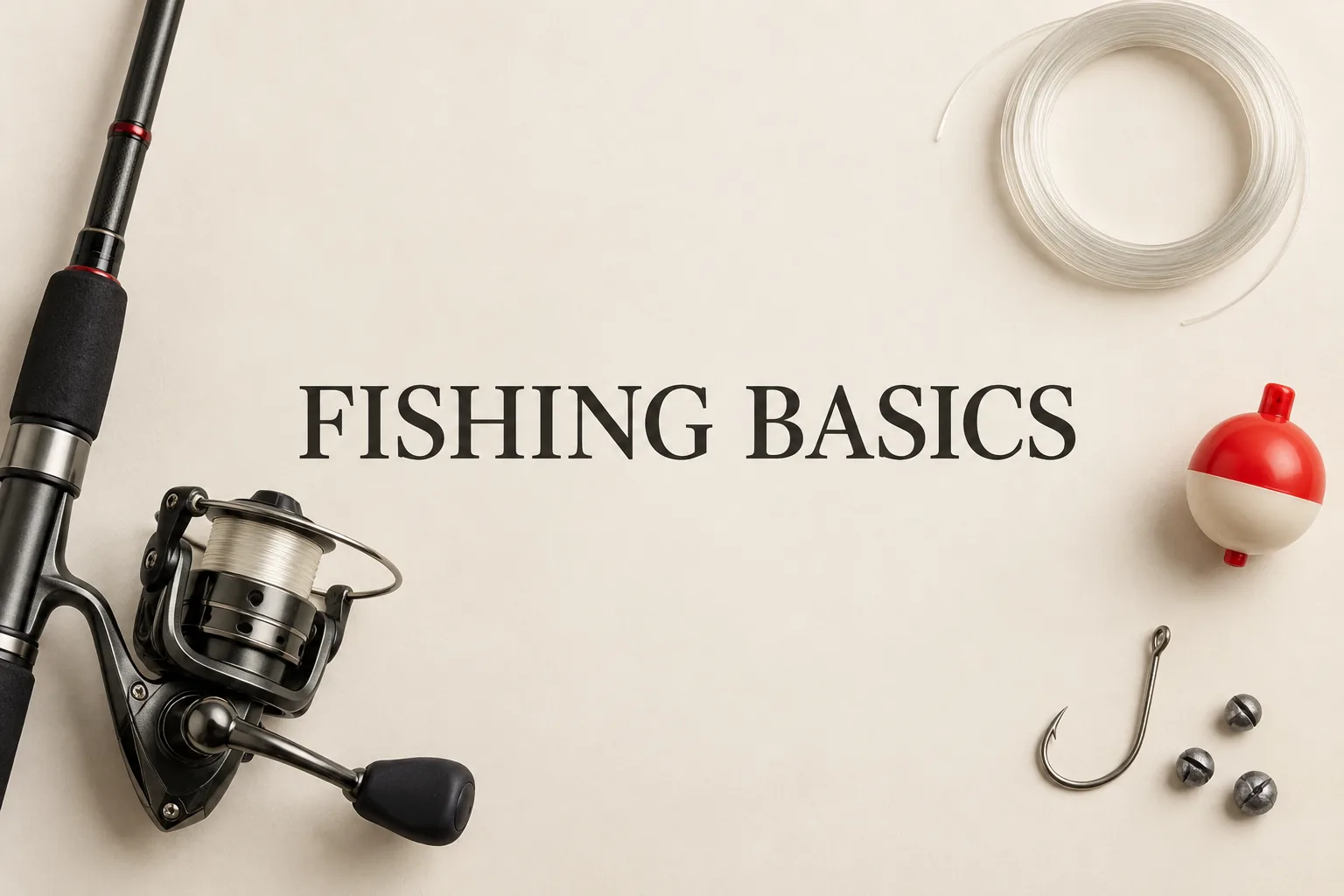
Fishing becomes easier to understand when it is treated as a sequence of small, controllable actions rather than one mysterious trick. The U.S. Fish & Wildlife Service’s beginner freshwater guide covers the setup and cast; NOAA Fisheries’ catch-and-release guidance covers what happens after the bite.
What needs to be in place before the cast?
A starter rig does not need to be complicated. The Fish & Wildlife Service guide describes a rod-and-reel setup with line, a hook, sinkers, a bobber, and bait or a lure. For the basic arrangement, place one or two sinkers above the hook, then use the bobber to position the bait at the intended depth.
That arrangement gives each part a job: the sinker helps place the bait, while the bobber gives the angler visible feedback. The useful insight is that rigging is not just preparation before fishing. It creates the signal you will use to decide what to do next.
Why practice the cast without a hook?
The Fish & Wildlife Service recommends practicing with a hookless casting plug. With a closed spin-casting reel, the sequence is straightforward: hold the reel button, bring the rod back, move it forward smoothly, and release toward the target.
This separates two problems that are easy to confuse. First, the rod has to move in a controlled direction. Then the button has to be released at the right moment. Practicing without a hook makes those movements easier to observe and repeat before bait, water, or a fish adds pressure.
What does the bobber actually tell you?
The bobber is not a command to react to every small movement. The guide identifies a clearer decision point: the bobber goes under, or there is a definite pull. At that point, lift the rod to remove slack, keep the line tight, and reel steadily instead of repeatedly yanking.
That sequence changes the beginner’s task. The goal is not to guess what the fish is doing. It is to wait for a recognizable signal, remove slack, and maintain tension. Casting and bite response are therefore connected: an intentional cast makes it easier to notice and respond to the next signal.
Why does handling belong in the fishing plan?
Landing the fish is only half of the technique when the fish will be released. NOAA recommends minimizing handling, using wet hands, avoiding the eyes and gills, and supporting the fish’s body if it must leave the water. A hook-removal tool can help, and when a hook is deeply embedded and cannot be removed safely, NOAA advises cutting the line close to the hook rather than forcing it out.
The practical deduction is simple: decide how the fish will be handled before it arrives. Wet hands and a removal tool are not afterthoughts; they are part of the same sequence as the rig and the cast.
What does it mean to have learned enough?
A useful definition is not catching the biggest fish or buying more equipment. It is being able to complete the loop deliberately: assemble a rig that provides feedback, make a controlled cast, respond to a clear pull without creating slack, and handle the fish with as little stress as possible.
That is the part of fishing that can be learned before luck enters the picture.