Why Do Humpback Whales Migrate So Far?
Humpback whales migrate between habitats with different jobs: feeding in cold, productive waters and breeding or calving in warmer seas. That division explains the distance better than the label of “long journey” alone.
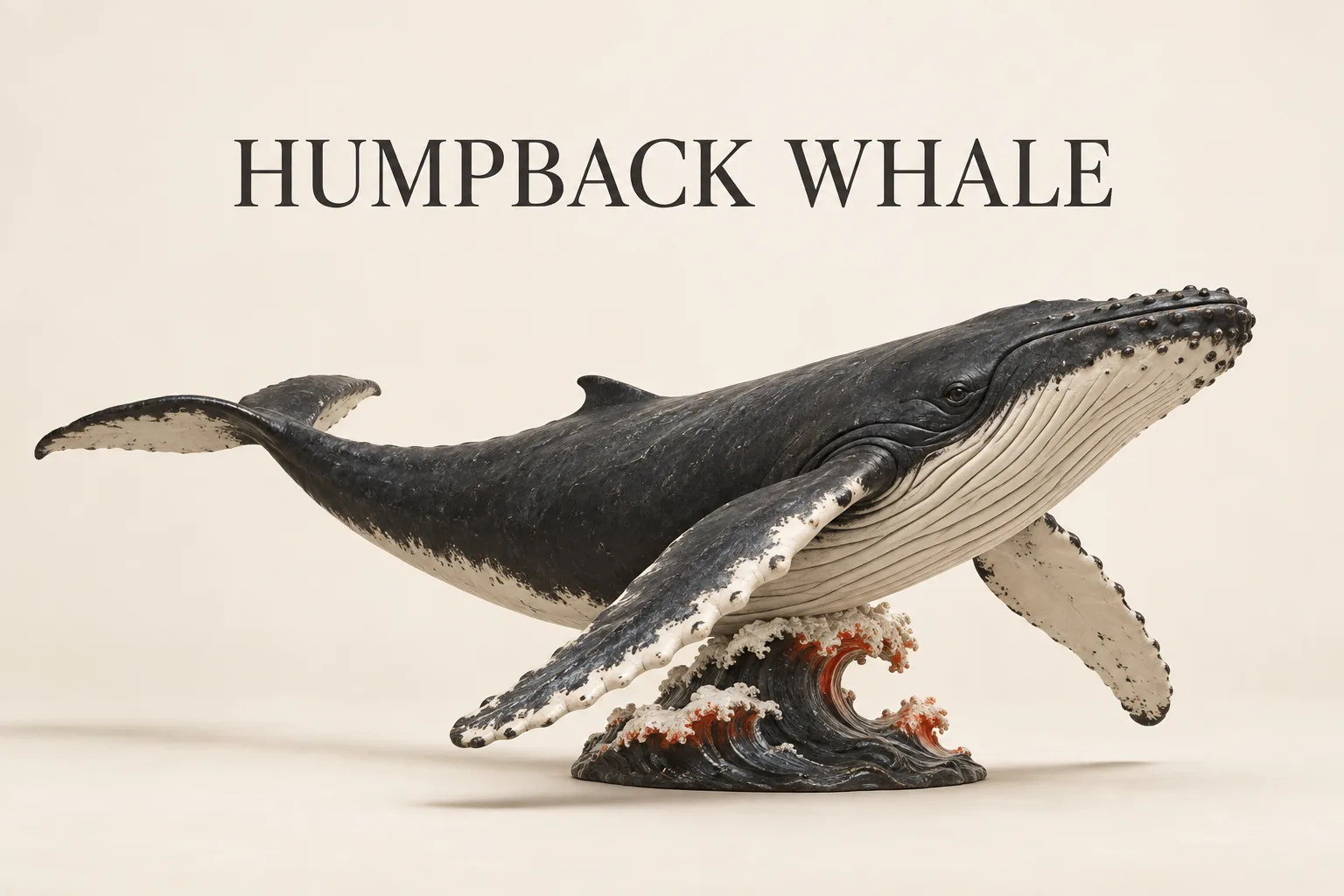
A humpback whale’s migration looks extreme only if the ocean is treated as one uniform habitat. NOAA Fisheries describes a more useful pattern: humpbacks move between cold, productive, high-latitude feeding grounds and warm tropical or subtropical breeding and calving areas. Some migrations cover about 5,000 miles.
The distance reflects a division of biological work. One region supplies food; another supports reproduction.
Why can’t one habitat do both jobs?
On feeding grounds, humpback whales filter-feed on krill and small fish through baleen. NOAA also describes bubble-net feeding, in which whales concentrate prey before feeding. The same profile explains that whales build up blubber during the feeding season.
Breeding and calving generally take place in warmer waters. Put together, these facts make the migration easier to understand: the whale is not simply searching for a better view or wandering between coastlines. Its route connects habitats that serve different needs.
That is the important insight. The journey is long because the resources are separated, not because every stop along the route is interchangeable.
What does the whale’s song tell us?
The song adds complexity without providing a completely solved explanation. The Olympic Coast National Marine Sanctuary says that primarily male humpback whales sing, especially in winter breeding areas. Scientists believe the behavior is connected to mating or reproduction, but its exact function has not been established.
That uncertainty matters. A song can be associated with breeding without having one confirmed message that observers can translate. The careful conclusion is that humpback behavior is observable, while its social meaning is still being studied.
How should a person interpret a sighting?
A quick sighting does not reveal which biological task brought a whale to that location. For anyone watching from a vessel, NOAA Fisheries recommends staying at least 100 yards from large whales unless stricter species- or location-specific rules apply. Its guidance also says never to place a watercraft between a mother and calf, and not to chase or encircle whales.
Those instructions fit the migration story. A whale may be part of a larger seasonal pattern that is invisible from the surface, and a mother-calf relationship cannot be understood safely by moving closer. Distance leaves room for the animal’s behavior to remain its own.
Humpback migration is best understood as a connection between habitats: food in cold, productive waters, and breeding or calving in warmer ones. That framing explains why the route is so long—and why one sighting can show only a small part of the whale’s life.