Why Humpback Whales Sing, Hunt With Bubbles, and Travel So Far
A closer look at what humpback whales may be doing when they sing, coordinate bubble-net feeding, and migrate between seasonal habitats.
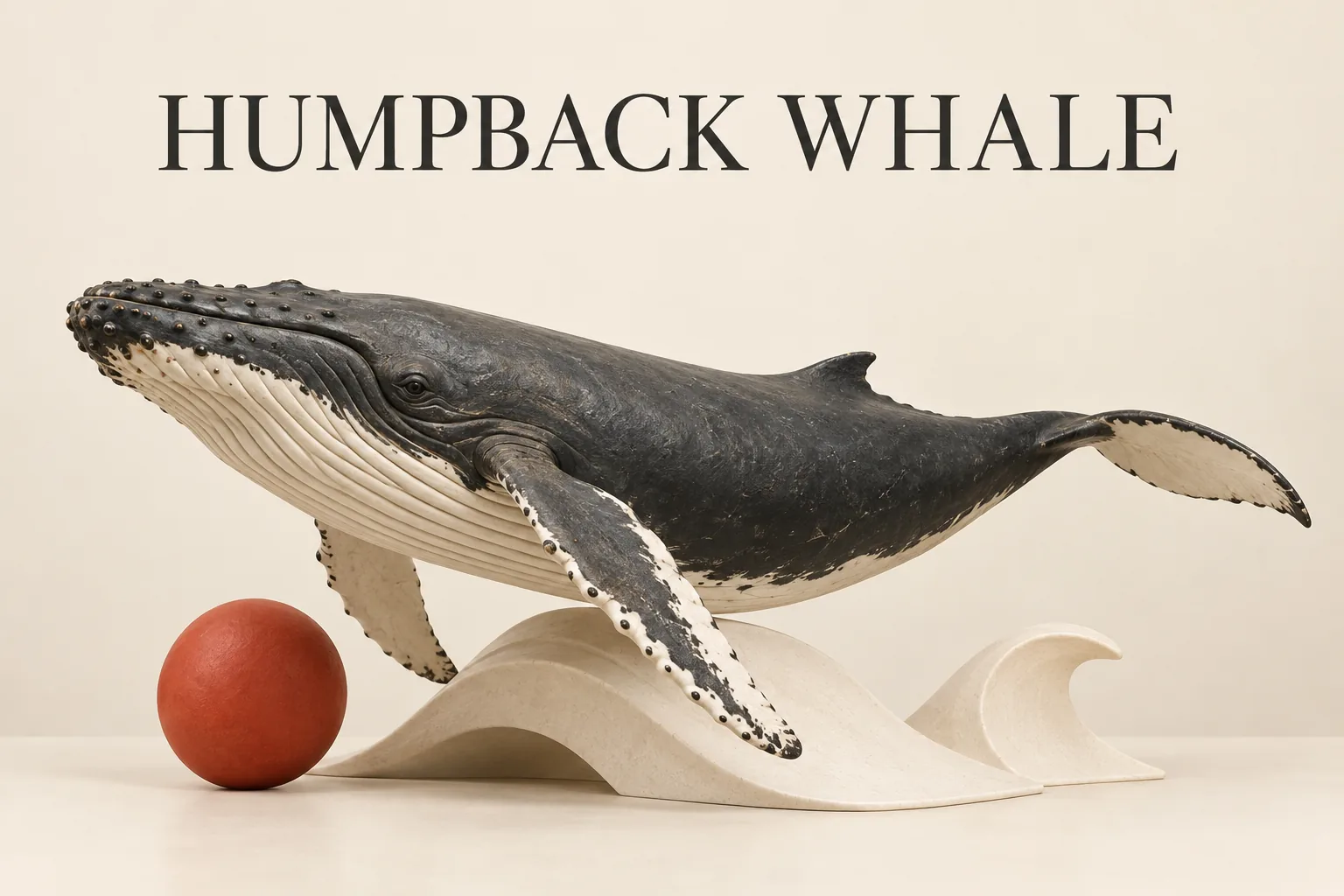
The most useful way to understand a humpback whale is not to treat its famous behaviors as unrelated spectacles. Singing, bubble-net feeding, and migration are clues to different problems the animal must solve in different settings.
What does a humpback whale’s song actually do?
According to NOAA Fisheries’ whale facts page, adult male humpback whales produce elaborate songs. The songs are associated with breeding-related behavior, can last up to about 30 minutes, and change from year to year.
That makes the song more than a generic whale soundtrack. It is better understood as a specialized reproductive display whose meaning depends on who is making it and what the whale is doing at the time.
The distinction matters because humpbacks also make other sounds. NOAA’s marine mammal acoustics overview describes social calls produced by males, females, and juveniles in contexts that can include social interaction and feeding. Hearing a humpback vocalization, by itself, does not establish that the whale is performing its famous song. The sound’s structure and context matter.
Why do humpbacks hunt inside a bubble net?
Humpback whales filter-feed with baleen, eating prey such as krill and small schooling fish. NOAA’s humpback whale species profile describes bubble-net feeding as a coordinated technique. Whales use curtains of bubbles—and sometimes sounds, the seafloor, or their pectoral fins—to herd and concentrate prey before lunging upward through the net with their mouths open.
The important idea is not simply that whales blow bubbles. The bubbles change the arrangement of the prey, while coordinated movement helps turn a scattered food source into a concentrated target. The behavior therefore connects the physical environment with group action: the whale is using the water around the prey as part of the hunting method.
Why travel between cold and warm waters?
NOAA says humpback whales occur in all major oceans. They generally use cold, productive high-latitude waters for feeding and warm tropical or subtropical waters for mating, calving, and nursing. Some populations migrate roughly 5,000 miles. In the North Pacific, whales may travel about 3,000 miles between Alaska and Hawaiʻi, sometimes in as few as 28 days.
The distance is less informative than the pattern. Migration links two different seasonal needs: finding concentrated prey and reaching habitat associated with reproduction and calves. In that sense, the journey is not just an impressive feat of endurance. It is a movement between places that support different stages of the whale’s life.
What can scientists learn when a whale is hard to see?
NOAA Fisheries uses hydrophones, acoustic detectors, and spectrograms to study marine mammal sounds. Those recordings help researchers investigate where whales occur and whether their vocalizations are connected with activities such as feeding, breeding, migration, or social interaction.
This also explains why context is essential. A sound is not a complete description of behavior; it becomes more useful when researchers compare its form and timing with location, season, and other observations. The same principle helps readers interpret whale stories more carefully: a song, a call, and a feeding sound should not automatically be treated as the same signal.
The bigger lesson about humpback whales
Humpback whales are compelling because their signature behaviors are solutions to different ecological demands. Song is linked to breeding-related behavior. Bubble-net feeding concentrates prey through coordination and the surrounding water. Migration connects feeding grounds with warmer reproductive and nursing areas.
Taken together, these behaviors suggest a better question than Why are humpback whales so extraordinary? Ask instead: What is this whale trying to accomplish in this setting? That shift turns a spectacular sight or sound into a more useful clue about the animal’s life.